Get Healthy!
- Posted July 9, 2026
New, Highly Accurate Brush Test Can Detect Mouth Cancer Within An Hour
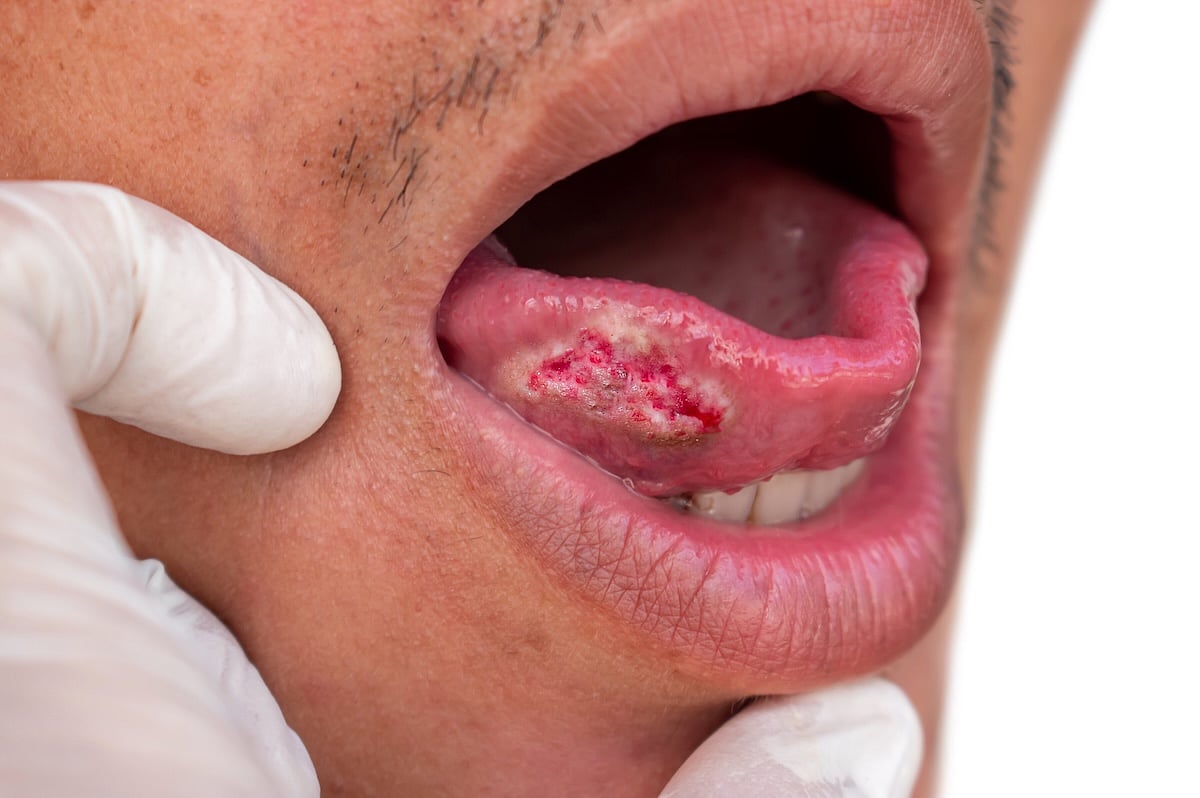
A non-invasive brush test can diagnose mouth cancer within one hour, potentially boosting detection rates, a new study says.
The brush test proved nearly 96% accurate in detecting oral cancer when tested on hundreds of patients, researchers reported recently in the journal Biomarker Research.
Up to now, diagnosis of oral cancer has required painful biopsies, with doctors cutting tissue from the tongue, gums, cheek or tonsils, researchers said in background notes.
As a result, both patients and doctors are loath to undertake such biopsies, particularly if repeated procedures are required, researchers said.
“Oral cancer survival is directly linked to how early it is found, yet our current diagnostic pathway is blunt — most patients with a suspicious lesion end up having an invasive biopsy even when the overwhelming likelihood is that it is benign,” lead researcher Muy-Teck Teh, a professor of molecular oral oncology at Queen Mary University of London in the U.K., said in a news release.
“This test changes that. It gives clinicians a rapid, accurate and non-invasive way to triage patients, and crucially, it can be repeated,” Teh continued. “That means we can now monitor patients with persistent pre-malignant lesions regularly and systematically — and pick up cancers much earlier than we would have been able to before."
Up to 90% of unnecessary scalpel biopsies could be prevented by using the new brush test, researchers estimate.
In 2026, about 60,480 new oral cancers are expected to be diagnosed in the U.S., and about 13,150 people may die from oral cancers this year, according to the American Cancer Society.
More than half (53%) of mouth cancers are diagnosed at stage 4, when cancer is at its most advanced and treatment is less likely to succeed, researchers said.
Five-year survival rates for advanced oral cancers range from 22% to 46%, depending on whether the cancer is in the lip, tongue, floor of the mouth or top of the throat, the ACS says.
People who smoke, drink or are infected with human papilloma virus (HPV) are at highest risk for oral cancer. Sun exposure also increases risk, especially for lip cancer.
The new test uses a round brush to gently swab cells from the site of a suspected mouth cancer. That sample is then run through genetic analysis, looking for four specific genes that have been linked to oral cancers.
For this study, researchers sought to validate the brush test by analyzing 1,090 samples taken from 545 patients.
Results showed that the test accurately detected oral cancers nearly 96% of the time, and correctly ruled out non-cancers 95% of the time. False-positive and false-negative rates were less than 5%.
“We were genuinely astonished by the fact that the brush swab test performance is comparable to a microbiopsy,” Teh said. “It suggests that the biological signal captured by these four genes is sufficiently strong and consistent that it can be detected even from the superficial exfoliated cells collected by a brush biopsy.”
He said the clinical implications are significant.
“Patients no longer need even a minimally invasive procedure to benefit from molecularly guided triage,” Teh said.
In particular, the test could be used to keep tabs on suspicious lesions in a person’s mouth, so that any cancers springing from these sores can be detected as soon as possible, researchers said.
Queen Mary University says it is looking for a commercial partner to help develop the test for clinical use. With the right partner, the test could be ready for market within two years.
More information
The American Cancer Society has more on oral cancers.
SOURCES: Queen Mary University of London, news release, July 6, 2026; Biomarker Research, June 23, 2026
